
IACER
Institute of Advanced Communication, Education & Research
Know Us Better
The Institute of Advanced Communication, Education and Research (IACER) was established with the pedagogic motto that "disciplinary research begins with interdisciplinary beginnings."
IACER is committed to fostering a vigorous and distinctive campus community, and we pride ourselves on the diversity of our students' academic and professional backgrounds. We believe that this diversity enriches the educational experience at IACER, creating a rich intellectual and communal environment wherein we interact with, and learn from, those who possess values, abilities and opinions that differ from our own.
Affiliated to Pokhara University and located in the heart of Kathmandu, IACER has grown to become one of Nepal's premier institutions for advanced communication, English studies, and interdisciplinary research.
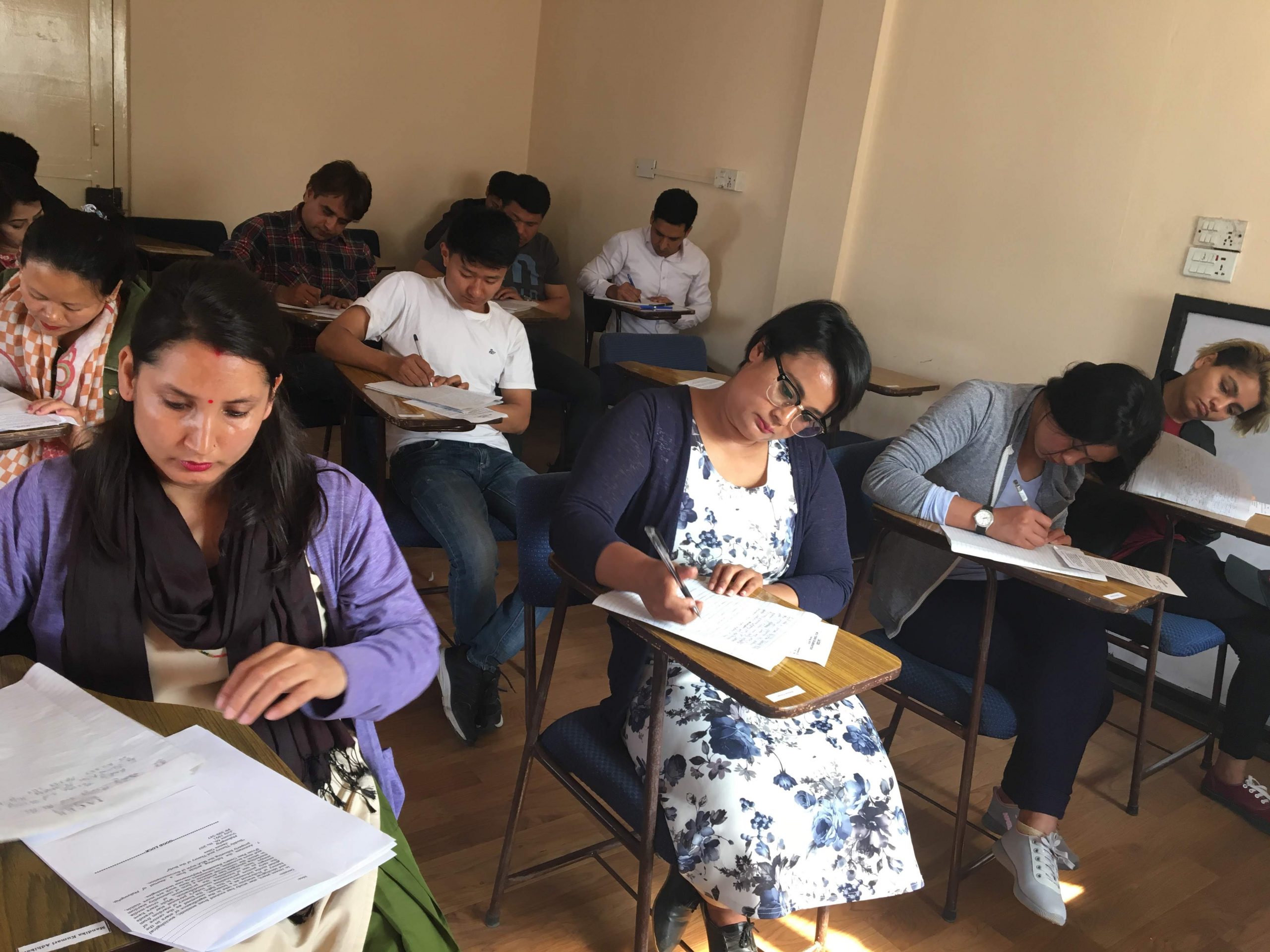
IACER is committed to providing an interdisciplinary academic experience that transforms students and equips them for a lifetime of learning. We offer students the concepts and tools required to engage with issues of local and global concern, and prepare them for professions that are in demand in an increasingly interdependent world.
IACER is devoted to excellence in writing and research, teaching and learning, to help students push the boundaries of knowledge so that they enable themselves in the highly competitive world of professionalism. IACER will stimulate your intellectual curiosities and challenge you to explore new avenues of thought.
Our Master's program incorporates study of literature and cultural discourses. Students are oriented towards English Studies and studies of Race, Ethnicity, Class, Nation, Gender, and Conflict. M.Phil. covers wide-ranging topics from Humanities and Social Sciences, equipping students for disciplinary research of their interest.
IACER welcomes students from a wide range of academic disciplines, enriching our learning community with diverse perspectives.
Course Description: We will discuss major issues and questions like: how does Socrates propose the problems of defining and teaching excellence, how Derrida finds meaning as dissemination, and why Spivak is hesitant while remarking on the subaltern. How do Foucauldian ideas of truth and knowledge have Nietzschean connections? What makes Kantian logic both rational and romantic?
Assignment: Group Presentation: Select a passage from any one of the writings and discuss the topic in 10 minutes. Term Paper: 5-7 pages (MLA guidelines).
Course Description: This course combines theories of conflict and peacebuilding practices with a close exploration of Nepal's history and peace process. The central focus is understanding conflict in terms of the relationship between the state and society.
Grading: One Final Paper (4500-5000 words), Four Essays (900-1000 words), Two Workshop Exercises, Two Presentations, Weekly Assignments.
Course Description: This course introduces students to a rich variety of short stories in the Gothic tradition. Led by writers such as Edgar Allan Poe, Joyce Carol Oates, Charlotte Perkins Stetson, and William Faulkner, students explore the ambiguous nature of evil, possession, and deviance.
Assignments: Bi-weekly reading responses, group presentations, mid-term paper (5-7 pages), final paper (5-7 pages).